Community
The Future of Remote Work

The pandemic brought many concerns to peoples lives that weren’t heavily considered before. Social isolation, mental health, safety concerns, and most relevantly how work is conducted. Remote work was a necessity in 2020, with countless industries finding a way to operate non physically.
Remote Work is Shifting
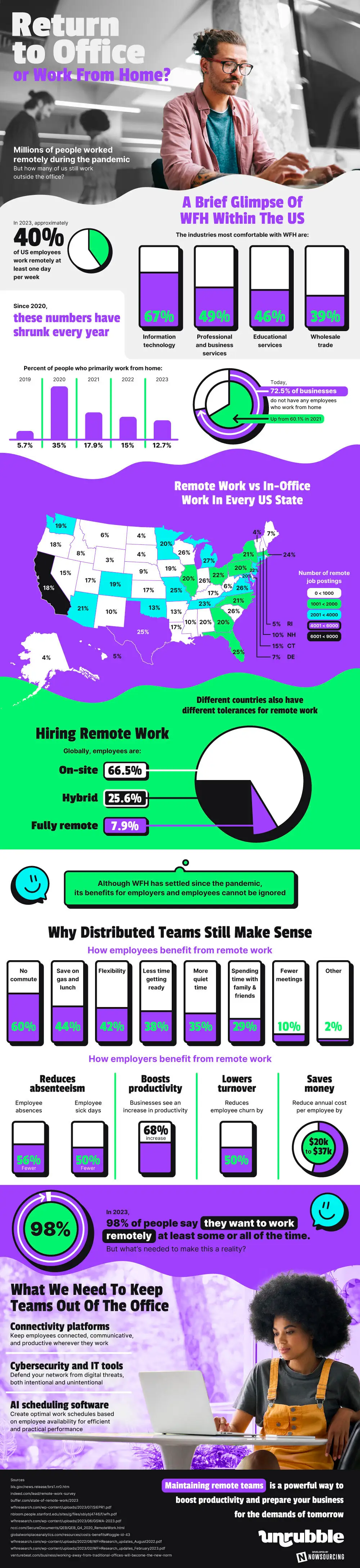
Although this trend has not persisted. In fact, in every year since 2020 the amount of people working remotely has dropped. Interestingly, this does not correlate with public perception of remote work. Today 98% of people want to work remotely some or all of the time. Out of all of the innovations the pandemic brought, it’s one of the most liked.
The reasons behind this are clear. First and foremost remote work means no commuting to work. The average commute has become longer and longer in recent years, so this factor has only grown in relevance. Instead of spending an hour getting ready, and an hour getting to work, employees can spend that time resting or doing actual work.
Another big advantage is the flexibility remote work offers. Employees are able to work more readily and have more options for food and lunch breaks. Finally remote work gives people more time with family and friends. Less time commuting means more time with valuable people, but casual interactions can also happen throughout the day at home.
These are massive advantages to the employee, but if remote work is becoming common, it must hurt the employer, right? Surprisingly this isn’t the case. Remote workers are more efficient, show up more, and turnover less. Although this doesn’t mean that employers don’t think remote work hurts them.
The biggest issue with remote work is the gap in communication. Although services like Zoom allow communication to occur smoothly, they’re not perfect. The ability to physically walk over and communicate is something that’s unattainable with remote work. Employers worry that this will make it easy for workers to slack when working remotely. Another big issue is office spaces which are going vacant and wasting employers money.
These are the issues causing remote work to decline, although they certainly can be addressed. First, communication should be made as seamless as possible. Connectivity platforms and more integrated remote workplaces are the way forward for this issue. Remote communication can never match physical, but it can certainly get better.
Conclusion
As for the workspaces and employer mentality, these will just have to slowly change with time. Remote work is still new to a lot of industries, it needs to balance out before it can grow. Moving forward with remote work is not a matter of making it work, it already works well. It’s a matter of letting industries, employers, and technology adapt.