
Community
Role Of AI In Healthcare And Healthcare Marketing
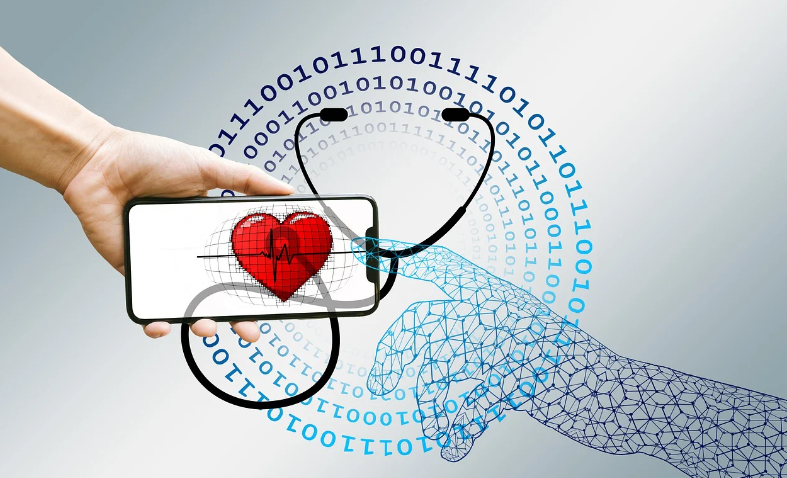
The rise of healthcare AI has brought significant changes to the medical field in the last decade. AI’s role in healthcare has become essential for innovation and streamlining medical practices globally.
In the 21st century, AI in the medical field has gained attention due to advancements in technology and data analysis. This period saw an increase in computational power, the availability of massive datasets (Big Data), and improvements in machine learning algorithms. The important moment came when healthcare professionals realized how AI could effectively address key challenges, from improving diagnostic accuracy to tailoring treatments and optimizing operational processes.
The benefits of integrating AI into healthcare quickly became clear. AI proved capable of handling and analyzing extensive medical data beyond human capacity. This played a vital role in disease diagnosis, outcome predictions, and treatment recommendations. For example, AI algorithms showed superior accuracy and speed in analyzing medical images like X-rays and MRIs compared to human radiologists, often leading to the early detection of diseases such as cancer.
To grasp its journey, we have asked different marketers and health executives how AI became a vital force, looking into its uses, advantages, and transformative examples in healthcare.
AI Uses and Types in Healthcare
Let’s explore AI uses and types that are revolutionizing patient care and administrative processes.
Machine Learning
Machine learning plays a crucial role in the collaboration between artificial intelligence and healthcare. It’s a key technique in various AI and healthcare technologies, with diverse applications.
In healthcare, machine learning has revolutionized medical diagnosis and treatment. By processing extensive clinical documentation, machine learning algorithms can identify patterns and predict medical outcomes more accurately than before. This data-driven approach, from analyzing patient records to exploring new therapies, empowers healthcare professionals to enhance treatments and cut costs. AI technologies, such as machine learning, contribute to precise disease diagnosis, drug discovery, and tailored treatment plans, improving healthcare accuracy.
Precision medicine stands out as a significant application of traditional machine learning. Predicting successful treatment procedures based on patient’s characteristics and treatment frameworks represents a significant stride in the data science of healthcare organizations. This application relies on supervised learning, using known outcomes for training with medical images and clinical data.
Deep learning, another facet of AI in healthcare, finds application in speech recognition through natural language processing. Deep learning models may produce results challenging for human interpretation due to features that lack clear meaning. As deep learning technology advances, healthcare professionals must grasp its functioning and effective utilization in clinical settings, particularly in interpreting results.
Natural Language Processing (NLP)
Natural Language Processing (NLP) is a part of artificial intelligence that helps computers understand and use human language. This technology has changed many fields, including healthcare. In healthcare, NLP is used for various tasks, like improving patient care by making diagnoses more accurate, simplifying clinical processes, and offering more personalized services.
For example, in medical records, NLP can be used to accurately find information that helps diagnose illnesses. It can also identify suitable treatments and medications for each patient and predict potential health risks based on their past health data. Additionally, NLP gives doctors useful tools to handle large amounts of complex data quickly, which would take a long time to do manually.
NLP is proving to be a very helpful tool in healthcare, allowing medical professionals to use artificial intelligence for more accurate diagnoses and better-personalized treatments. This use of AI in healthcare is becoming crucial in the modern healthcare industry and is likely to become even more advanced and used in a wider range of applications.
Rule-based Expert Systems
In the 80s and later, rule-based expert systems were the primary AI technology in healthcare. Even today, AI in healthcare is commonly used for clinical decision support. Many electronic health record systems (EHRs) provide a set of rules with their software.
These expert systems involve human experts and engineers creating a detailed set of rules in a specific knowledge area. They work well initially and are easy to understand. However, as the number of rules increases, often surpassing several thousand, conflicts can arise, and the system may break down.
Adapting these systems to changes in the knowledge area can also be challenging. Slowly, machine learning is taking over from rule-based systems, using data interpretation and proprietary medical algorithms.
Diagnoses and Treatment
Pareen Sehat, RCC at Wellbeings Counselling said, for the past 50 years, artificial intelligence (AI) in healthcare has focused on diagnosing and treating diseases. Early rule-based systems showed potential but faced challenges in being fully accepted for clinical practice. They weren’t markedly better than humans in diagnosis, and integration with clinician workflows and health record systems was less than optimal.
Pareen explained, regardless of whether rules-based or algorithmic, using AI in healthcare for diagnosis and treatment plans often encounters difficulties in aligning with clinical workflows and electronic health record (EHR) systems. Integration challenges within healthcare organizations have hindered widespread AI adoption more than the accuracy of suggestions. Many AI capabilities for diagnosis, treatment, and clinical trials from medical software vendors are standalone and cater to specific areas of care.
While some EHR software vendors are starting to incorporate basic healthcare analytics with AI, they are in the early stages. To fully harness AI in healthcare through a standalone EHR system, providers must either embark on significant integration projects or leverage third-party vendors with AI capabilities that can integrate with their EHR.
Administrative Aspects
Chris McDermott of Intercoastal Consulting & Life Care Planning said, Artificial intelligence (AI) is changing the administrative aspects of healthcare, streamlining tasks like entering data, processing claims, and scheduling appointments. By automating these routine activities, AI in healthcare allows providers and organizations to have more time for patient care and managing finances.
Chris said, “this technology also has the potential to reduce mistakes made by humans, offering a quicker way to review health records, medical images, claims, and test results. With AI giving medical professionals more control over their workflow, they can offer better patient care while being efficient with their budget.”
AI’s ability to analyze patients’ medical histories for faster and improved results is transforming healthcare delivery, allowing professionals to invest more time and resources in their patients. As AI leads the way in enhancing patient care, healthcare providers can confidently focus on delivering quality services while saving time and money through AI-powered administrative tasks.
AI in Healthcare Marketing
In healthcare marketing, AI emerges as a powerful tool for analyzing data, predicting trends, and aiding decision-making. Its application in personalized marketing involves understanding individual preferences, enabling personalized marketing strategies to enhance engagement and loyalty.
AI in healthcare marketing is employed for various purposes, enhancing strategies and improving outcomes:
Personalized Marketing
ABDULLAH BOULAD, Founder & CEO of Senses Wellness Clinic said, personalized marketing with AI involves using smart algorithms to analyze patient data and create tailored marketing strategies. Healthcare organizations leverage AI to gather insights from various sources, like online behavior, patient feedback, and health records. This information helps in crafting targeted marketing efforts, such as showing specific ads to patients based on their interests or sending personalized emails with discounts and relevant health information. The goal is to enhance patient engagement, satisfaction, and loyalty over time.
Predictive Analytics
Predictive analytics, a facet of AI, uses data and machine learning to forecast future events based on past information. In healthcare marketing, it involves analyzing patient data (demographics, medical history, and social media activity) to predict healthcare preferences and needs. This enables healthcare organizations to customize marketing approaches, improving patient engagement and satisfaction. Predictive analytics also helps identify patterns and trends in patient behavior, leading to better outcomes and more efficient resource management. For instance, it can help in targeting interventions for patients at a higher risk of readmission.
AI chatbots
Manobal Jain of Trainerfu discussed about AI chatbots saying these chatbots are becoming popular in healthcare marketing because they offer patients an easy way to get quick information. These chatbots talk to patients like humans and can understand what patients ask using something called natural language processing (NLP).
The best thing about AI chatbots is that they make patients happy. Patients can get information anytime, not just when the hospital is open. The chatbots can share accurate information, which helps patients feel less worried about health issues.
AI chatbots also help doctors and nurses by answering simple questions so they can focus on harder ones. These chatbots also give hospitals useful information about what patients need, helping them improve how they connect with patients and market their services.
Data Collection and Analysis
Phil Collins, Head of Sales & Marketing at Polymaster Group said, AI also helps in collecting and analyzing a lot of data quickly. Healthcare marketers can use this to target their campaigns better by understanding patient behaviors and preferences. AI collects information from many places, like social media and websites, to build a complete picture of patient behavior.
This helps healthcare organizations know what patients need and what kind of marketing works best. By figuring out the most effective marketing channels, AI helps hospitals use their resources wisely. In the end, using AI for data collection and analysis makes healthcare marketing better and more efficient.
SEO and Content Creation
In today’s digital world, being visible online is crucial for healthcare practices. AI plays a key role in improving SEO (search engine optimization) and creating content, bringing a significant shift to how healthcare works. At Practice Builders, AI tools are used to study search patterns, making sure healthcare providers stay visible online. Using AI strategically in healthcare SEO not only boosts visibility but also tailors content to connect with the intended audience. This highlights AI’s importance in remaining relevant and authoritative in the constantly changing digital world.
AI Libraries
Keeping up with ever-growing medical knowledge is a continuous challenge in healthcare. AI-powered libraries are a clear example of how AI is reshaping healthcare. These libraries efficiently organize and showcase the newest research, clinical trials, and medical information. They give healthcare professionals easy access to the most recent resources, making it simpler to stay updated.
Challenges in AI for Healthcare Marketing
Bringing AI into healthcare marketing comes with its own set of challenges. A significant hurdle is privacy concerns, particularly when it comes to using patient data for personalized marketing. Patients might feel uneasy about their data being used in marketing efforts. To address this, healthcare institutions need robust data protection measures to ensure patient information remains confidential and secure.
Ethical considerations add another layer of complexity. AI algorithms can inadvertently incorporate biases present in the training data. Healthcare companies must be diligent in ensuring their AI-driven marketing doesn’t perpetuate existing biases or discriminate. It’s crucial to balance the use of AI in marketing to enhance patient outcomes while maintaining ethical standards.
Tackling these challenges head-on is essential for healthcare organizations to use the full benefits of AI in their marketing strategies.
The role of AI in healthcare stands as a transformative force, reshaping the landscape of patient care and medical practices. The future holds promising prospects as AI continues to evolve, offering innovative solutions and contributing to the evolution of healthcare into a more patient-centric, technologically advanced domain. The journey of AI in healthcare is an ongoing narrative, and its positive influence is poised to leave an indelible mark on the way we approach and deliver healthcare services.
Stay informed, explore, and embrace the innovative possibilities that AI brings to patient care. Whether you’re a healthcare professional, a patient, or an enthusiast, join the journey toward a technologically advanced and patient-centric healthcare experience.