
Community
The Future of Water Infrastructure
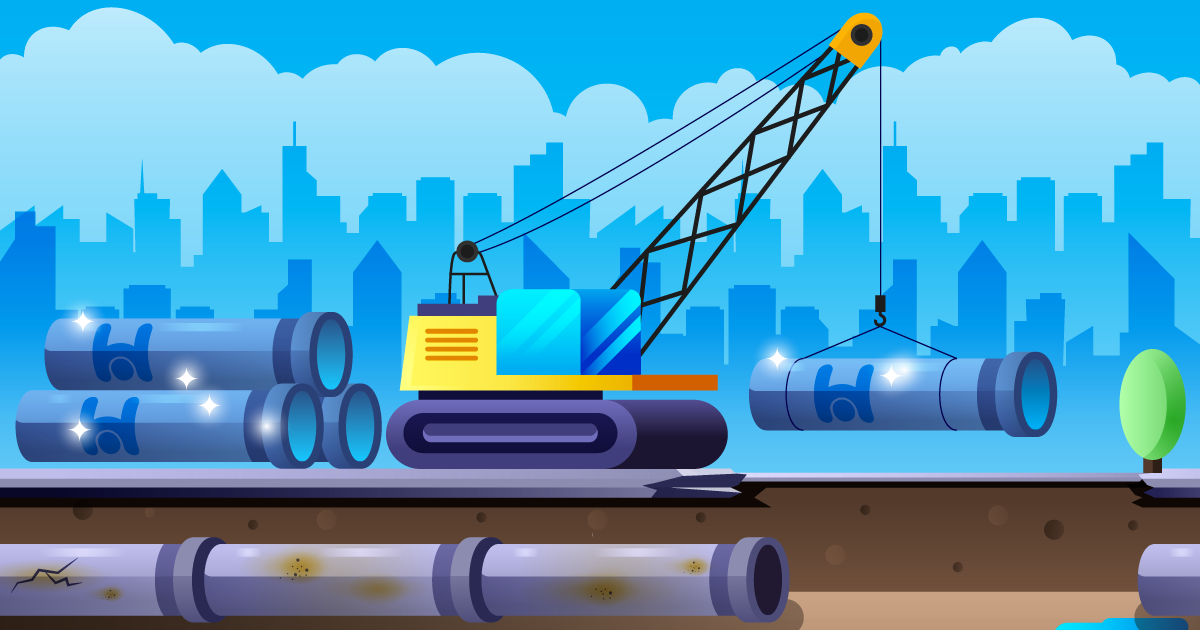
The Future of Water Infrastructure
Water pipes have been around for thousands of years, and serve as a critical aspect of human infrastructure. The first water pipes emerged in the Indus River Valley between 4,000 and 3,000 BCE. These pipes were made out of clay. In Ancient Crete / Minoa, humans began to utilize wood pipes between 3,000 and 2,150 BCE. More innovations followed; in Egypt, the first copper pipes emerged, and Ancient Greece introduced the first true aqueducts in the form of underground terracotta pipes.
Today, the United States alone has over 2.2 million miles of water pipe. This is enough pipe to complete 4.5 round trips to the moon. However, despite many innovations over thousands of years, challenges remain with water pipe systems. In fact, in the United States, there is a water main break approximately every two minutes.
Water Infrastructure Innovation
The United States has its own history of water pipe usage and innovations. For instance, in 1820, steel pipes were installed. These pipes have a longevity of around 85 years, although the actual lifespan is reduced to less than 50 years with corrosion. Steel pipes have poor thermal conductivity, are difficult to repair and replace, and corrode easily, making it important to find an alternative.
The next pipe that took the stage was the prestressed concrete cylinder pipe (PCCP). This pipe was created in 1942 and has a longevity of 50-100 years. While these pipes have some benefits when compared to steel pipes, they come with challenges as well. For instance, PCCP has a high rate of premature failure.
The ductile iron pipe (DIP) came after the PCCP with the goal of reducing the PCCP’s high rate of failure. DIPs have a longevity of 55 years. However, they have a large environmental impact and still experience corrosion, which can cause health problems in humans.
Innovation is needed to solve these problems, just as it was needed over the course of the past thousands of years as societies tweaked and improved water pipes. The United States will need to rely on innovation as it carries out a necessary overhaul of its water infrastructure. In 2024, communities in the United States will invest close to $8.5 billion to revamp drinking water pipe networks, taking the first steps toward this goal.
One solution is Hobas fiberglass reinforced polymer mortar (FRPM). This has been around since 1960, and has proven successful. It has a longevity of 150+ years, has a low carbon footprint compared to other pipes, and can be utilized in new pipes and existing pipes. It can cut water waste and maintenance needs, reduce odor emissions, and prevent catastrophic sinkholes. Overall, FRPM is a good option as the United States seeks to improve its water infrastructure.
Conclusion
Sustainable and innovative solutions are the key to the future. Already, so much has changed about the water pipe over time, and more changes are to come, ushering in a more efficient era. Options like FRPM may be the key to the United States’ infrastructure overhaul, and will be important in the coming years.