
Community
The Growing Influence of AI in Modern Marketing Strategies
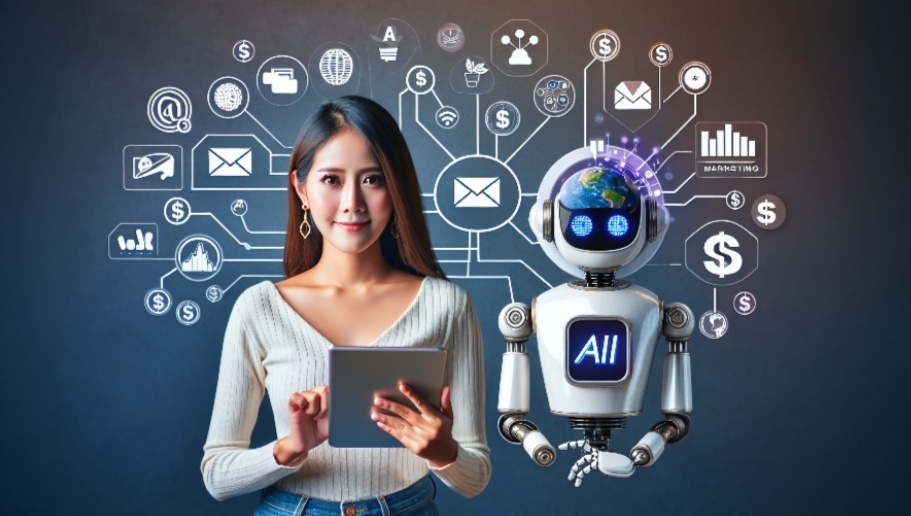
Adding Artificial Intelligence (AI) to marketing will drastically change many existing practices and allow for substantial competitive advantages over previous methodologies. This AI-supported marketing is brought to a new level with unheard-of precision to match consumers with the right engagement level. The article reiterates why it is precisely AI in marketing that so many modern agencies have come to prefer.
Discover how law firm marketing agency FirmPilot AI revolutionizes marketing with its proprietary AI engine. By analyzing competitors’ marketing, website trends, and Google data, FirmPilot automatically generates high-performance content, boosting client bases by 200-300% at half the cost of traditional methods. Founded by Jake Soffer, an AI expert with over 15 years in NLP, FirmPilot was inspired by the ineffectiveness of conventional marketing agencies experienced by Jake’s brother, a personal injury lawyer. Learn more about how FirmPilot raised over $7 million to transform legal marketing at FirmPilot’s website.

Enhanced Data Analysis
AI does far better than methods used traditionally in marketing at the handling of vast volumes of data. AI sorts through huge volumes of data effortlessly and can analyze consumer behavior patterns, market trends, and even past campaign effectiveness—basically applying machine-led learning algorithms that aid in making a correct decision and better strategy formulation without heavy guesses but with more predictability in output.
Personalization at Scale
Massive scaling in this area makes AI stand out in the ‘”accuracy of personalization”.’ Traditional marketing often bases decisions on broad demographics; AI can tackle personal content about preferences and behaviors, hence increasing the relevance and effectiveness of the sent marketing messages. Such personalization makes customers feel more truly engaged, involved, and considered, resulting in loyalty.
Automate repetitive tasks
However, AI drives routine and repetitive marketing workflows: email marketing, customer segmentation, and ad placements. It liberates a human to focus on a higher level of strategic and creative component work within their jobs, thereby significantly improving productivity and avoiding mistakes that humans could most probably make.
Real-Time Decision Making
Information is consumed and reacted to by AI systems at exponentially greater speeds than those of human teams. This becomes vital in the fast operational environments digital marketing has, where conditions are bound to change at breakneck speed. These AI-driven tools can adjust campaigns on the go, ensuring each dollar counts in the ever-dynamic nature of the market and consumer behavior.
Predictive Marketing
AI’s advanced predictive analytics features enable marketers to be perceptive about potential consumer behaviors in the future based on historical data. Such perceptions lead to proactive changes in campaigns to be carried on, better budget allocation, and improved returns on investment. Predictive marketing can help not only in foreseeing future market trends but also in preparing more effective marketing strategies.
Benefits of AI in Marketing
- Scalability: AI solutions can perform complex tasks at a scale that will be beyond the human workforce.
- Efficiency: Streamlines operations and reduces time spent on manual tasks.
- Accuracy: It minimizes errors when the data are being analyzed and in targeting the customers.
- Speed: Real-time insights lead to very rapid changes in the marketing strategy.
Cost Efficiency
That means AI could significantly lessen the cost of acquisition and increase the return on investment through improved targeting shaving off wastage through better precision marketing. This cost efficiency is a substantial advantage over traditional marketing, where budgets might be spent on less targeted, spray-and-pray campaigns.
In fact, their superiority over AW in marketing could be seen in their capability to analyze vast volumes of data, personalize experiences at an individual level, automate mundane tasks, arrive at real-time decisions, predict future trends, and optimize budgets spent. With technology evolving continuously, this gap is bound to widen, making AI an essential tool in everyone’s marketing arsenal. The adoption of AI in marketing is not only for a competitive edge but also to establishes new highlights that engage and satisfy the modern consumer.