
Community
Ting Lu, Ph.D.: A Trailblazer in Synthetic Biology
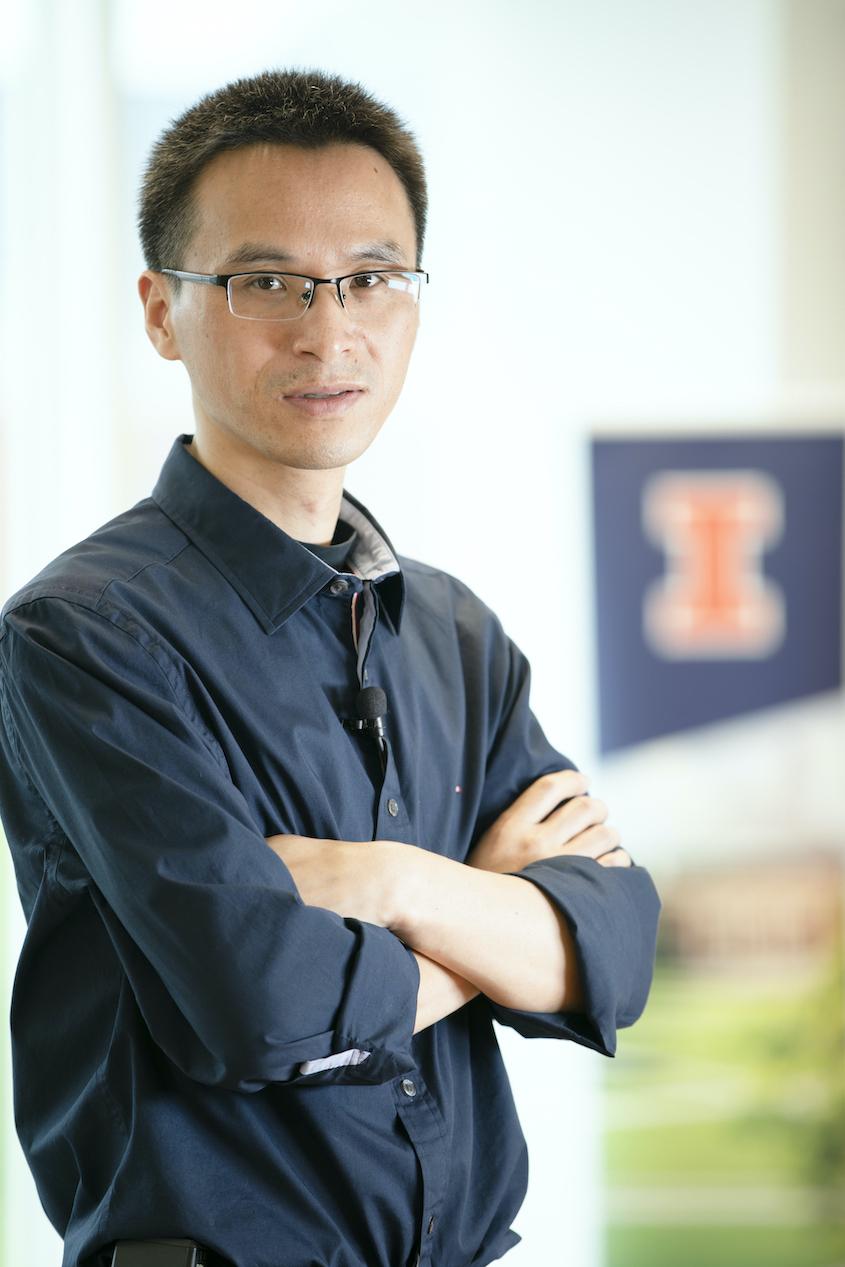
Dr. Ting Lu is a professor of bioengineering and a Donald Biggar Willett Faculty Scholar at the University of Illinois Urbana-Champaign (UIUC). An expert in gene circuit engineering, Dr. Lu is acclaimed for his contributions to microbial synthetic biology.
Education
Dr. Lu obtained his B.S. in Theoretical Physics from Zhejiang University in 2002, followed by a Ph.D. in Biophysics from the University of California at San Diego in 2007. He then honed his expertise in experimental synthetic biology through postdoctoral training at Princeton University, Massachusetts Institute of Technology, and the Wyss Institute at Harvard University, spanning from 2007 to 2011. This multidisciplinary background has endowed Dr. Lu with a versatile skill set and an open mindset, which are instrumental for interdisciplinary science.
Career
Since 2011, Dr. Lu has been an integral part of the faculty at the University of Illinois Urbana-Champaign (UIUC), where his primary role is as a professor in the Department of Bioengineering. Additionally, Dr. Lu contributes to various interdisciplinary units at UIUC, serving as a faculty affiliate with the Center for Biophysics and Quantitative Biology, the Carl R. Woese Institute for Genomic Biology, the Center for Digital Agriculture, the Department of Physics, the National Center for Supercomputing Applications, and the Carle-Illinois College of Medicine.
Works
Dr. Lu’s research is anchored in synthetic biology, an interdisciplinary field that applies tailor-made gene circuits to program microbial cellular functions for biotechnological applications.
Dr. Lu spearheads efforts in quantitative gene circuit design, a foundational pillar of synthetic biology. Along with his students, he developed a set of quantitative frameworks that integrate circuit behaviors with host physiology, combine gene expression with metabolic reactions and environments, and examine circuit-host interactions across scales in various species. Dr. Lu is also dedicated to uncovering the basic design rules governing synthetic microbial ecosystems, another frontier in synthetic biology. He has identified spatial interaction scale as a key factor in range expansion, demonstrated the variability of interaction strength in driving succession, and elucidated the role of division of labor in substrate utilization. Furthermore, he has developed a systematic methodology for ecosystem engineering and an individual-based computational platform for multiscale community simulations.
In addition, Dr. Lu leverages the power of synthetic biology to forge novel bio-based solutions for sustainability and manufacturing. For example, to combat plastic pollution, Dr. Lu engineered a bacterial consortium that upcycles polyethylene terephthalate (PET) into valuable chemicals, such as the biodegradable polymer polyhydroxyalkanoate (PHA). In tackling food insecurity, Dr. Lu and his team are developing technology for the on-demand production of nutritious, palatable, and safe food using air, water, and electricity. Furthermore, Dr. Lu has developed a suite of microbial cellular factories for the advanced manufacturing of biofuels and chemicals, such as butanol, using sustainable feedstocks. These initiatives contribute to addressing key societal challenges and ultimately facilitate the development of a sustainable bioeconomy.
Dr. Lu’s research has garnered attention from numerous newspapers and media outlets, including The Wall Street Journal and Newsweek in the U.S., Wirtschaftswoche and Die Welt in Germany, VEJA in Brazil, Teknoscienze in Italy, and La Razón in Spain, among others. His work has also been featured in specialized publications such as Genetic Engineering & Biotechnology News and the American Institute of Chemical Engineers’ Chemical Engineering Progress.
Awards
Dr. Lu’s scientific achievements have been recognized with numerous awards, including the National Science Foundation CAREER Award, the Office of Naval Research Young Investigator Award, the American Chemical Society Infectious Diseases Young Investigator Award, and the Young Innovator in Cellular and Molecular Bioengineering. He has also received the Maximizing Investigators’ Research Award from the National Institutes of Health and has been named a Fellow of the American Institute for Medical and Biological Engineering, among many other honors. In 2021, Dr. Lu and his collaborator, Dr. Stephen Techtmann, were jointly awarded the Future Insight Prize by Merck KGaA for their groundbreaking work in converting plastic waste into edible food, a recognition given to pioneering scientists addressing humanity’s greatest challenges.
Teaching and Outreach
Dr. Lu is a committed educator. He teaches both undergraduate and graduate courses at UIUC, where he earned a spot on the list of teachers ranked as excellent by their students. In his research lab, Dr. Lu leads a diverse group of postdoctoral fellows, graduate and undergraduate students, as well as high schoolers. After training in his lab, many of his students have advanced their education at top institutions like Harvard and MIT. Additionally, eight of his mentees have secured independent faculty positions in the U.S. and other countries. Deeply committed to fostering diversity, equity, and inclusion, Dr. Lu actively engages in various outreach initiatives at UIUC. These include teaching at summer camps for high school students, participating in the Engineering Open House, and mentoring undergraduate jamboree teams. Furthermore, through participation in UIUC’s “Art in Science” program, an artwork from Dr. Lu’s lab was selected for exhibition in New York City to broaden the impact of science.