
Community
Your Smart Car is Probably Tracking You
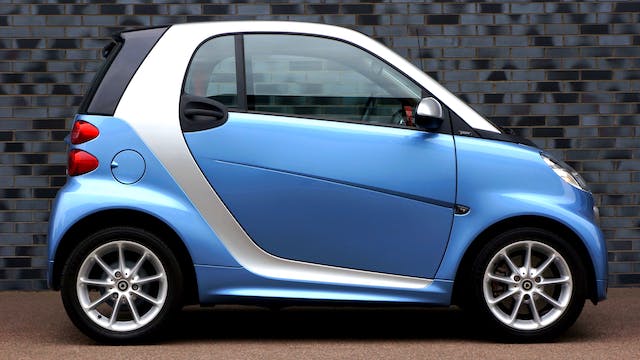
From the type of music you’re listening to, your weight, and even your immigration status – your car knows more about you than you think, and that’s becoming a major problem for concerned drivers.
In the last several decades, the cars we drive have become more connected, and in tune with us as drivers, and legacy automakers are now investing billions each year to design and manufacture smart, more efficient, and sophisticated cars than their nearest competitor.
Yet, with all this onboard functionality and never-ending connectivity, many motorists are beginning to wonder what it’s all for, and why your car needs access to your text messages or even the photo album on your smartphone.
Our Obsession With Connectedness
The race for innovation seemed to have blurred the lines between intrusion and privacy. For some time already, we’ve been actively aware of how big-tech companies and smartphone manufacturers are using our personal data to create more “personalized” or “tailored” digital experiences.
Yet, companies have always wrapped their suspicious activities in a blanket of ambiguity, and we’ve seemingly made peace with the fact that our searches are constantly being monitored to create a more “user-centric” experience.
ExpressVPN’s research found that there are nearly twenty different data points through which smart cars can collect information about us, our passengers, and our driving behavior.
Big data has become the name of the game. The more you can collect, the better. And legacy automakers aren’t going to let this opportunity pass them by either, not without seeing how they can leverage the playing field in such a way that they can know everything about the people that buy and drive their cars.
We can’t ignore that some of the models we’re currently seeing coming off production lines are smarter, safer, and more efficient than ever before. However, the question we need to keep in mind is how far are we willing to push the boundaries to continue fueling our obsession with innovation and being constantly connected.
Well, that depends on the person or company you’re talking to. Some research has found that connected mobility or smart cars have become such an integral form of transportation, that around 37 percent of motorists would switch car brands to have autonomous driving, connectivity, electrification, and shared mobility.
In some parts of the world, such as China, this number is even higher, with 56 percent of drivers saying they would switch brands to have improvements in either one or all of these areas.
It quite doesn’t end there. In fact, more than a third of motorists today are interested in unlocking additional digital features in their vehicles or newer models after initial purchase.
At the rate we’re investing in the development of connected cars, these internet-connected cars will account for roughly 95 percent of all new vehicles sold by as early as 2030.
Being the fastest, or most sophisticated car on the road isn’t what automakers are after these days, instead, they’re looking to get to know their customers and passengers on a more personal level.
Fast Cars and Big Data
While our cars have become cleaner and more fuel-efficient over the last several decades, we’re now beginning to enter a completely new realm of driving connected cars.
However, we can’t put the blame solely on automakers but instead need to focus our attention on our insurance providers and telematics companies.
Insurance providers have managed to find a way to keep better records of drivers, ensuring the safety of the driver and passengers, but also have a dossier on which they can reflect in the event of an accident or claim.
Insurance companies often require customers to have a telematics device installed in their vehicles to track things such as hard or soft braking, and the acceleration of the vehicle. Additionally, these devices can also be used to track the location of a car in the event of it being stolen, or revisit older data for the revision of accident claims or minor incidents.
Some companies like Allstate call their program Drivewise, while Progressive calls theirs SnapShot and State Farm has Drive Save & Save. Whatever the name may be, chances are, as an owner of a new or pre-owned vehicle you’re probably paying for one of these services.
Now, what exactly do these telematic devices collect?
Well, that will mostly depend on the insurance provider, and the type of third-party device that has been used as part of the installation process. You see, insurance companies often use a third-party manufacturer to develop and produce telematics devices, which they then later have contracts with to track driver behavior to either increase or decrease premiums based on driving habits.
One company that manufactures these “forensic kits” or telematic devices can collect an endless amount of data, without even having to crack through your phone’s security features.
Once these devices have been connected to vehicle infotainment systems, they’re able to scan mobile phones, tap into our text messages, and further access more personal data such as the photos on your phone or voice automated sensors.
These devices that can help monitor driver behavior, or track potential obstructions on the road while a vehicle is in operation can later be sold to insurance companies, or potential third-party companies willing to pay for this data, such as policy and forensic investigators.
And our cars, what do they know about you?
Well, just about anything it seems, as one research paper highlighted that some smart cars can now collect reams of data on drivers without them even knowing it.
Aside from the most obvious things such as coordinates and live location, other things like our name, gender, age, and even other personal information such as our home address can be harvested through the car’s onboard computer system.
Other data, such as app usage, the music you’ve streamed, and even the websites you’ve visited can now be monitored, collected, and stored.
One company, The Ulysses Group, an American-based telematics manufacturer has developed a software system that can now track nearly 15 billion cars around the world, except in countries such as Cuba and North Korea.
Although the company has claimed that it’s never sold any data to any private third-party company, in the past, they’ve closely worked with the U.S. Military and have consulted for the American government.
While these cases may often be related to matters of national security, it does leave you wondering what the potential security risks may be in the event of data leaks or a cyberattack.
Well, there have been similar events that have happened in the past, where automakers experienced major data breaches, seeing millions of drivers’ personal information ending up in the hands of bad actors.
Automakers such as Toyota, Audi, and Volkswagen are among the few that have disclaimed potential data breaches in the past, leaving drivers vulnerable to potential virtual threats posed by malicious cyber intruders.
In fact, in 2021, Volkswagen released a statement following a data breach its sister company, Audi experienced, whereby more than 3.3 million clients had their information leaked without their knowledge.
They’re not the only ones, there are a plethora of mid to high-tier automakers that have had their cybersecurity systems put to the test by some enthusiasts, only for them to realize that their systems were either faulty or at risk of a potential cyber attack.
Protecting ourselves from our smartphones is one thing, but having to ensure that our cars don’t know too much about us, read our messages, or even scan through our search history is another thing to be concerned about.
The Bottom Line
Knowing that our cars can track our every move has helped us become attentive drivers, preventing potential accidents, and improving the onboard safety features that come with newer cars.
However, that’s a different story when we begin to consider how much our cars actually really know about us; and it’s not just our cars, it’s our insurance providers, and the companies that develop and manufacture the devices that are installed in our vehicles.
But to what extent does this benefit drivers, and will this ultimately improve the overall driving experience of our connected cars in the future, or have we become used to companies knowing every little bit of detail about us?
While we’re taught to keep our eyes on the road, companies can now keep an eye on us, at any given time of day, and regardless of where we are – as long as it’s not Cuba or North Korea.